Nidhi Maurya
 2 April 2026
 3 min
3 min
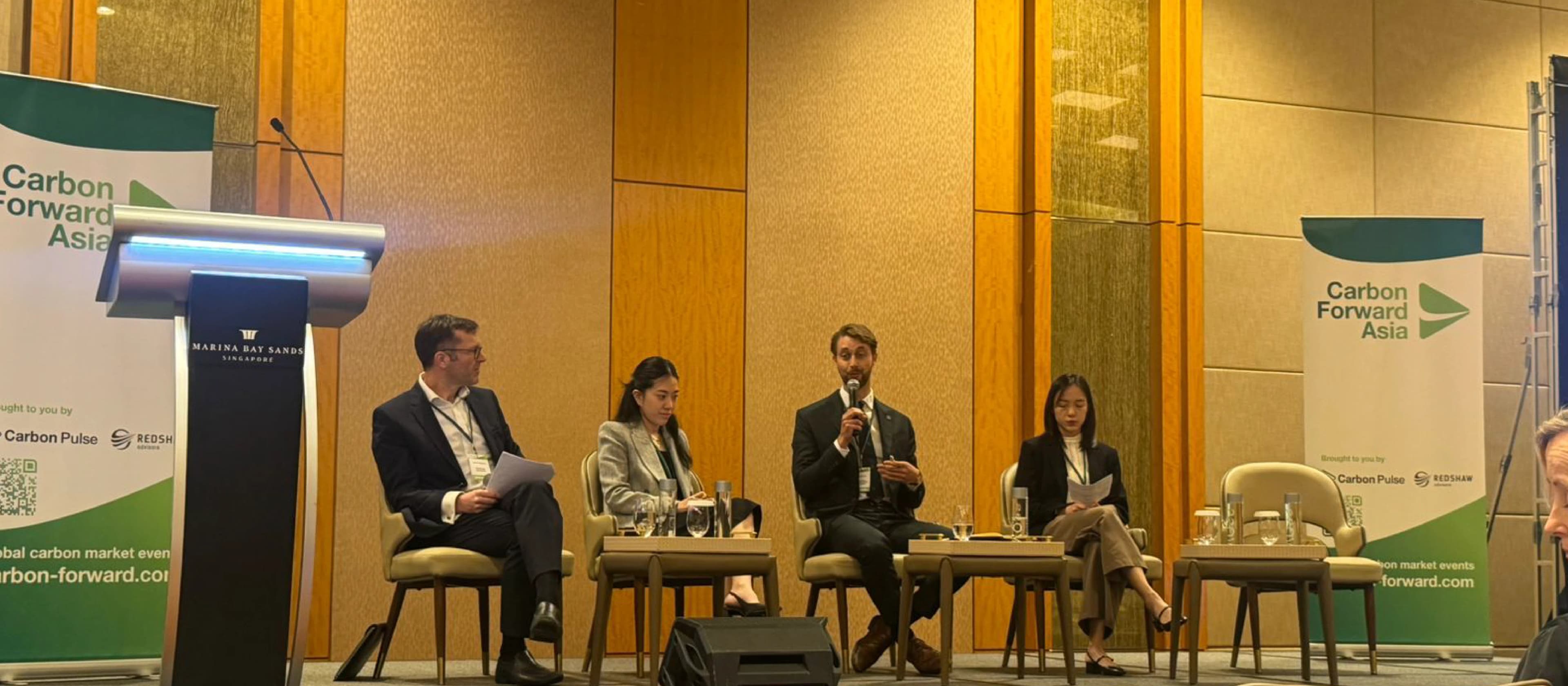
I spent the past few days at Carbon Forward Asia 2026 in Singapore, and one thing became clear: carbon markets are entering a far more disciplined phase. The conversation is no longer about scale for the sake of scale, but about quality, integrity, and trust, forming the foundation of market growth.
There is a visible shift in behaviour across both supply and demand. Buyers, particularly corporates, are becoming more intentional in how they approach procurement. There is a stronger focus on high-integrity credits, clearer strategies, and a deeper understanding of risk. Frameworks such as the Core Carbon Principles (CCPs) and carbon credit ratings are no longer theoretical constructs; they are actively shaping real market decisions. Scaling the market now depends less on volume expansion and more on mobilising investment into credible, high-quality projects supported by policy clarity and robust pipelines. A big part of this transition is being shaped by Article 6. It’s increasingly becoming the cornerstone of how markets will evolve, connecting voluntary and compliance markets and enabling cross-border transactions in a more structured way. Its implementation through bilateral agreements (6.2) and centralised mechanisms (6.4) is already supporting credible project pipelines across APAC economies.
Policy is also playing a much stronger role than before. Whether it’s Singapore’s carbon tax, CORSIA, or the broader implications of Carbon Border Adjustment Mechanism (CBAM), these mechanisms are creating clearer demand signals and price support for high-quality credits. The market is becoming more predictable in some ways, but also more demanding.
What stood out to me is that despite global uncertainties, particularly U.S disengagement from global climate frameworks, momentum isn’t slowing down. Thanks to regional leadership, private capital and market-based mechanisms, it’s just becoming more pragmatic. Asia-Pacific is at the centre of this shift, with countries like Japan, India, and Australia moving quickly on domestic markets while linking to global systems.
At the same time, China and South Korea continue to expand compliance markets, and there is growing interest in interoperability across ASEAN markets through shared infrastructure and aligned standards.
From a project development perspective, the bar is definitely higher now. There’s more scrutiny around verification, stronger alignment required with both Article 6 and national frameworks, and an overall expectation that projects need to be both technically robust and commercially viable.
Looking ahead, the direction is clear. By 2030, markets in Asia will likely be shaped by Article 6, CORSIA, CBAM, and stronger standards As carbon markets mature, the focus will increasingly be on building robust, scalable pipelines that align with global frameworks while remaining grounded in local realities.
In this scenario, success will depend on the ability to build credible, high-integrity supply, supported by strong policy frameworks and real capital flows. For market participants, this marks a shift from prioritising volume to delivering quality at scale.