Projects/Nature Based Solutions/Biochar/Conversion from Waste to Biochar/ProClime HIM Evergreen Biochar Project
Biochar Production from Pine Biomass for Carbon Removal and Forest Fire Risk Reduction
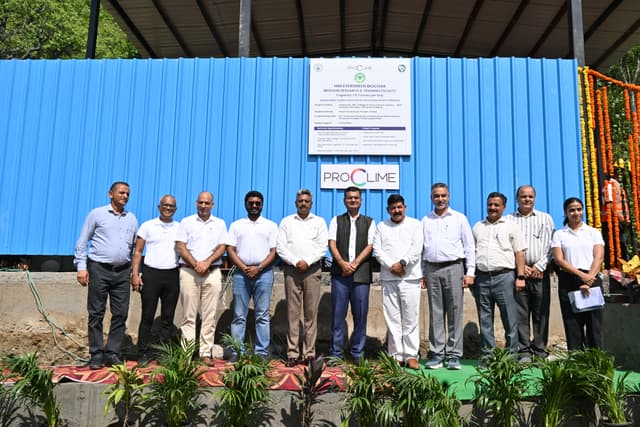
This project establishes a first-of-its-kind biochar production facility in Himachal Pradesh, converting hazardous pine needle biomass into stable biochar. It addresses the critical issue of forest fires by removing flammable pine litter from forest floors while generating a valuable soil amendment, creating rural livelihoods, and sequestering carbon for centuries. The project will source biomass from forest areas thereby reducing the chances of forest fire. The biochar produced is designed for durable carbon storage, with a persistence fraction (PF) exceeding 80% for over 200 years, aligning with the Puro.earth CORC200+ standard. The project is designed to achieve a net negative CO2e removal. This facility will also act as R&D site which will work on continuous procedural, technical and applicational improvements.
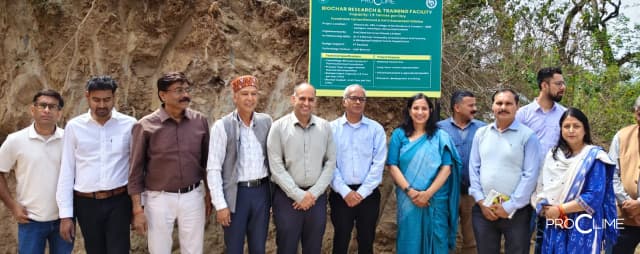
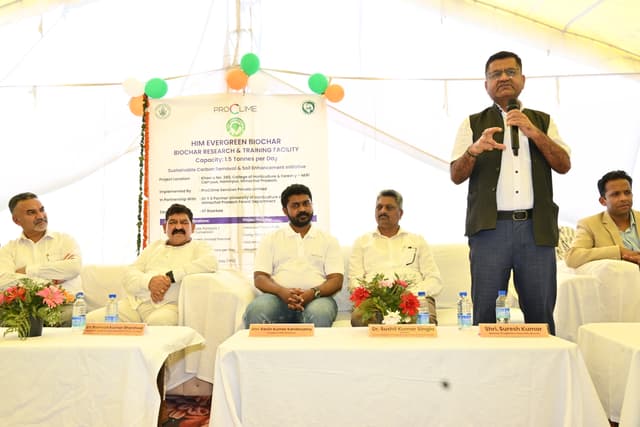
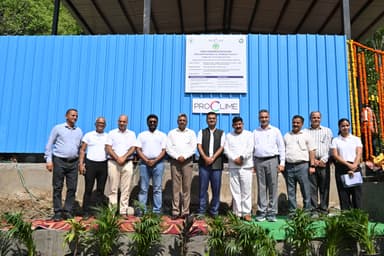
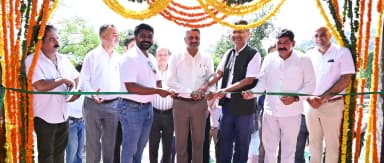
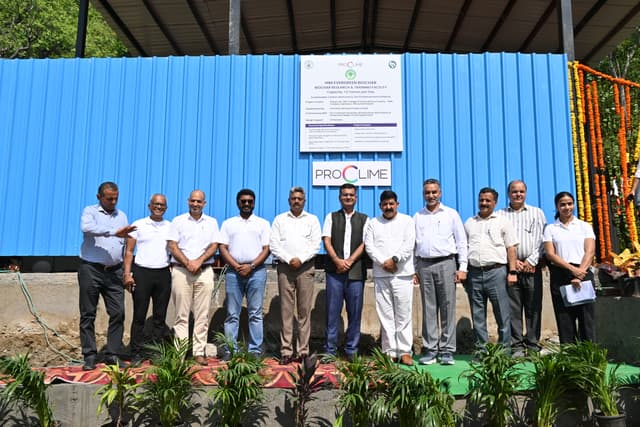
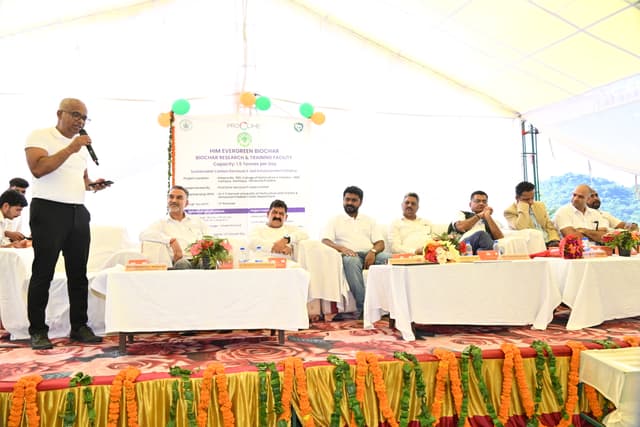
Pilot Project: Biochar Research & Training Facility
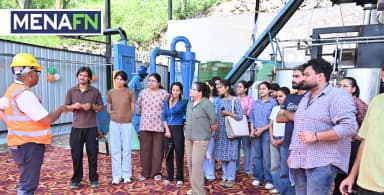
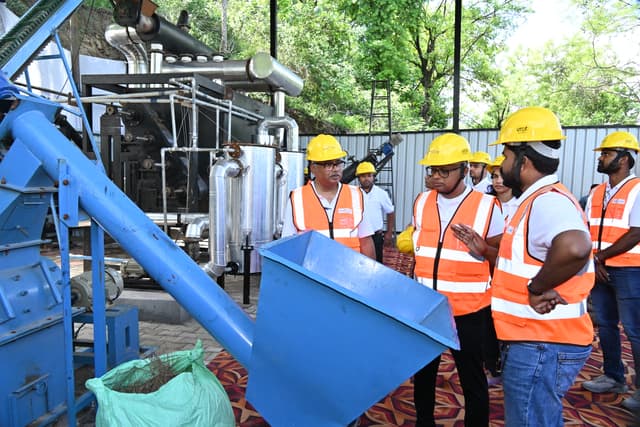
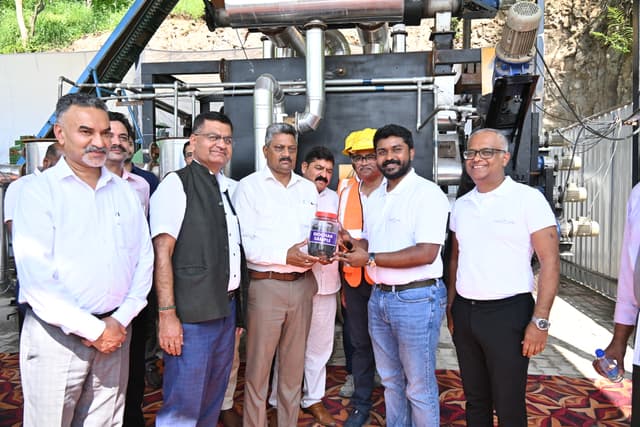
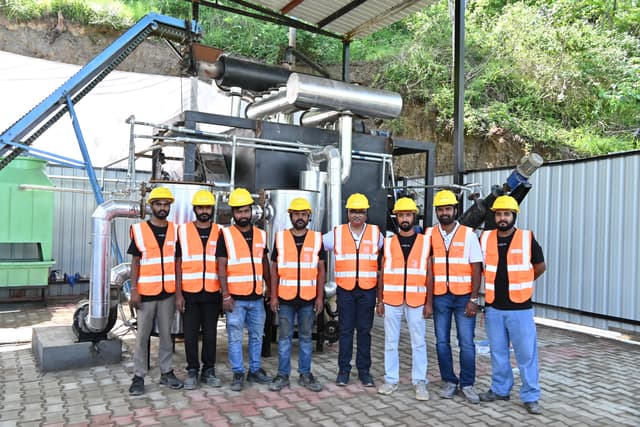
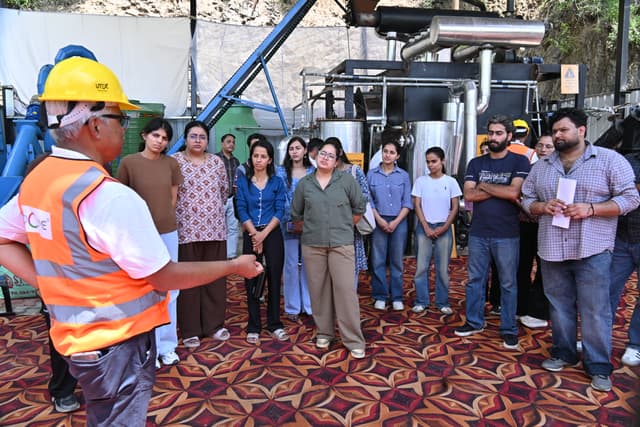
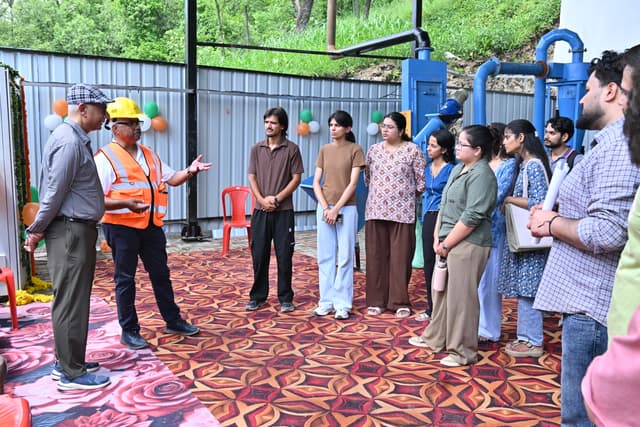
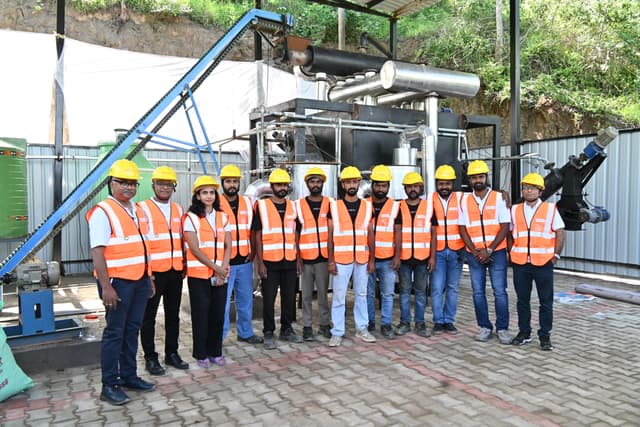
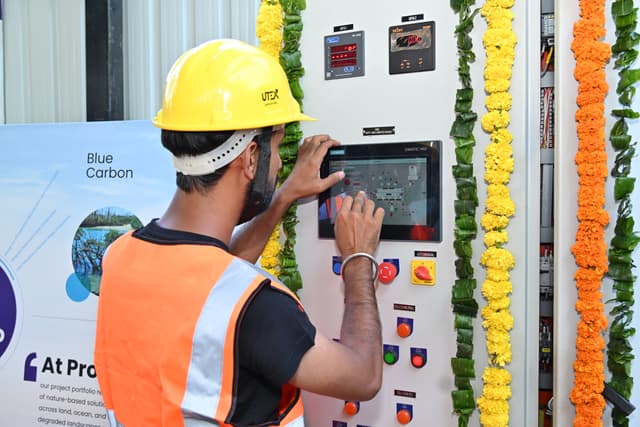
The project begins with the establishment of a dedicated Biochar Research & Training Facility, housing a 1.5 TPD pyrolysis unit designed to convert highly flammable chir pine (Pinus Roxburghii) needles into high‑quality biochar. This pilot facility functions as a centre for research, capacity building, and field demonstrations, enabling technology testing, operator training, and community‑level skill development.
Turning Forest Fire Risk into Climate Action
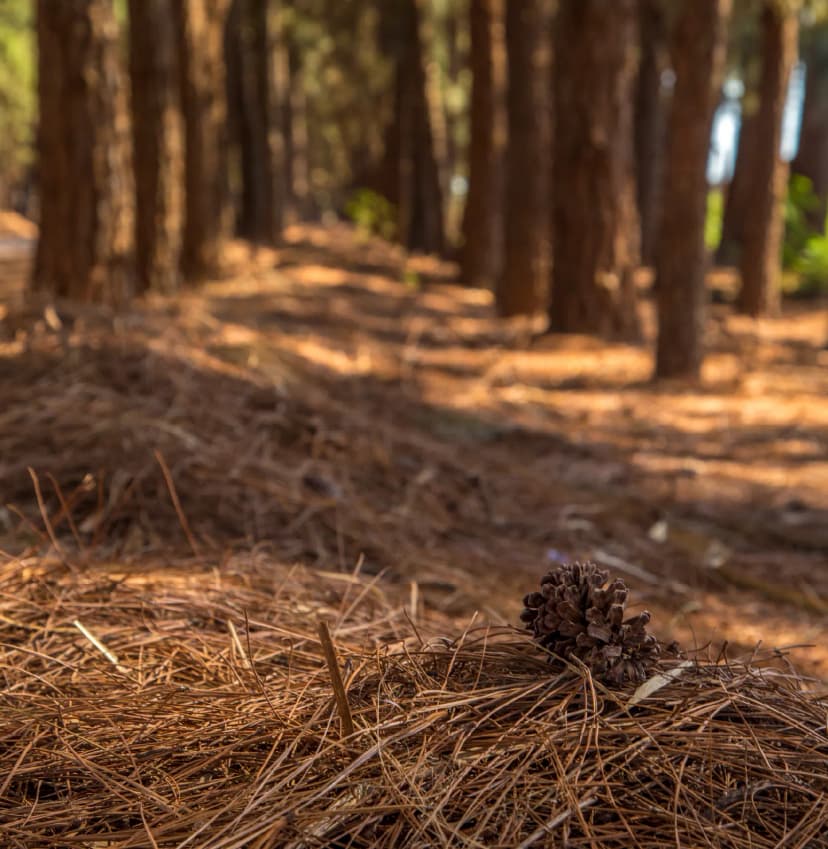
Chir pine needles accumulate in large quantities across the Western Himalayas and are one of the leading causes of seasonal forest fires. By transforming this waste biomass into biochar, the project directly reduces fire risk while creating a long‑term carbon sink.
Pilot Scale Impact
The biochar produced is stable, long‑lasting, and suitable for soil enhancement, carbon sequestration, and other environmental applications.
India’s First State‑Supported Biochar Program
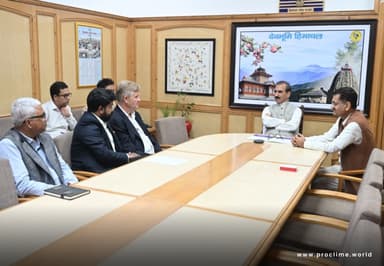
The initiative is guided by a landmark tripartite agreement between:
Himachal Pradesh Forest Department
Dr. Yashwant Singh Parmar University of Horticulture and Forestry (YSPUHF)
ProClime
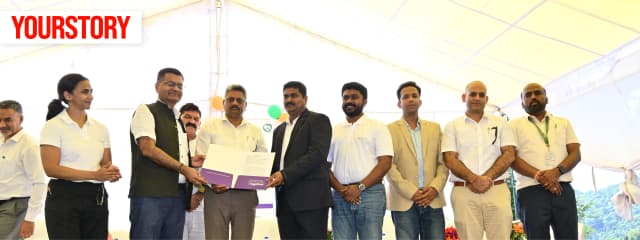
This collaboration makes the project India’s first state‑backed biochar program, establishing a scalable model for climate‑positive forest management and sustainable rural development.
Biochar is a stable, carbon-rich material produced by heating organic biomass in a controlled oxygen environment. Unlike ordinary charcoal used as fuel, biochar is designed to lock carbon into a solid form, preventing it from returning to the atmosphere as CO₂. Due to its highly porous structure, biochar improves soil health, enhances water retention, and supports beneficial microbial activity, making it a powerful tool for both climate mitigation and sustainable agriculture.
Biochar’s chemical characteristics play a key role in determining its longevity, as they influence both its structural stability and its interactions with the surrounding environment. In general, biomass processed at higher pyrolysis temperatures (above 500°C) produces biochar with greater stability, primarily due to the formation of more condensed polyaromatic carbon structures.
These polyaromatic structures are highly resistant to degradation. They are difficult to break down through biological processes—such as the activity of microorganisms, plants, and soil fauna—as well as through non-biological factors like ultraviolet radiation, oxidation, temperature fluctuations, and moisture.
The elemental composition of biochar also serves as an important indicator of its stability. A higher hydrogen-to-carbon (H/C) ratio typically reflects lower stability, whereas a lower H/C ratio—indicating a greater presence of aromatic carbon—along with a low oxygen-to-carbon (O/C) ratio, is associated with enhanced chemical stability and durability. Such characteristics are commonly observed in biochar produced under high-temperature pyrolysis conditions.
Biochar is a chemically durable, carbon-rich solid material produced from the pyrolysis of biomass. Pyrolysis is a thermochemical conversion process, where biomass is heated in an oxygen free environment to produce a mixture of solid biochar as well as condensable and non-condensable gasses. This process chemically stabilizes the carbon in the biomass, originally captured by plants through photosynthesis, preventing it from returning to the atmosphere through natural decomposition, or combustion, and thereby contributing to long-term carbon removal.
During pyrolysis, biomass is transformed into three key outputs:
1. Biochar (Solid)
Long-term carbon storage
Soil enhancer
Carbon-negative material
2. Syngas (Gas) - A mixture of CO, H₂, and CH₄ which can be reused to fuel the pyrolysis system or generate energy
3. Bio-oil (Liquid) - A dense, energy-rich liquid which can be used as industrial fuel or further refined.
Biochar has diversified applications under various industries. Following are some of the major applications,
Fallen pine needles could help India cut carbon emissions

Author : Vandana K.
Publication : Mongabay
https://india.mongabay.com/2025/08/fallen-pine-needles-could-help-india-cut-carbon-emissions/
Turning pine needles from fire risk to renewable fuel
Author : Ranjit Devraj
Publication : SciDevNet
https://www.scidev.net/asia-pacific/news/turning-pine-needles-from-fire-risk-to-renewable-fuel/
Physics-Based Modelling of Pine Needle Surface Fires and a Single Douglas Fir Tree: Comparison with Experiments
Author : Mohamed Sharaf, Duncan Sutherland,Rahul Wadhwani and Khalid Moinuddin
Publication : mdpi
https://www.mdpi.com/2571-6255/9/3/112
PINE NEEDLES FOR BIOFUEL PRODUCTION TO MANAGE FOREST FIRE AND ENVIRONMENT CONSERVATION IN HIMACHAL PRADESH
Author : Dheeraj Kumar, R K Aggarwal
Publication : Agri Journal World
https://journalworlds.com/agri-journal-world/article-pdf/pine-needles-for-biofuel-production-to-manage-forest-fire-and-environment-conservation-in-himachal-pradesh
Pyrolysis of pine needles: Parameter optimization using response surface methodology
Author : Omvesh, Meenu Jindal, Bhaskar Thallada, Venkata Chandra and Sekhar Palla
Publication : ScienceDirect
https://www.sciencedirect.com/science/article/abs/pii/S2589014X23000786
A critical review on biochar production from pine wastes, upgradation techniques, environmental sustainability, and challenges
Author : Amit Kumar Sharma, Praveen Kumar Ghodke, Nishu Goyal, Prakash Bobde, Eilhann E. Kwon, Kun-Yi Andrew Lin, Wei-Hsin Chen
Publication : ScienceDirect
https://www.sciencedirect.com/science/article/abs/pii/S096085242301060X