Anugraha Sundaravelu
 22 April 2026
 2 mins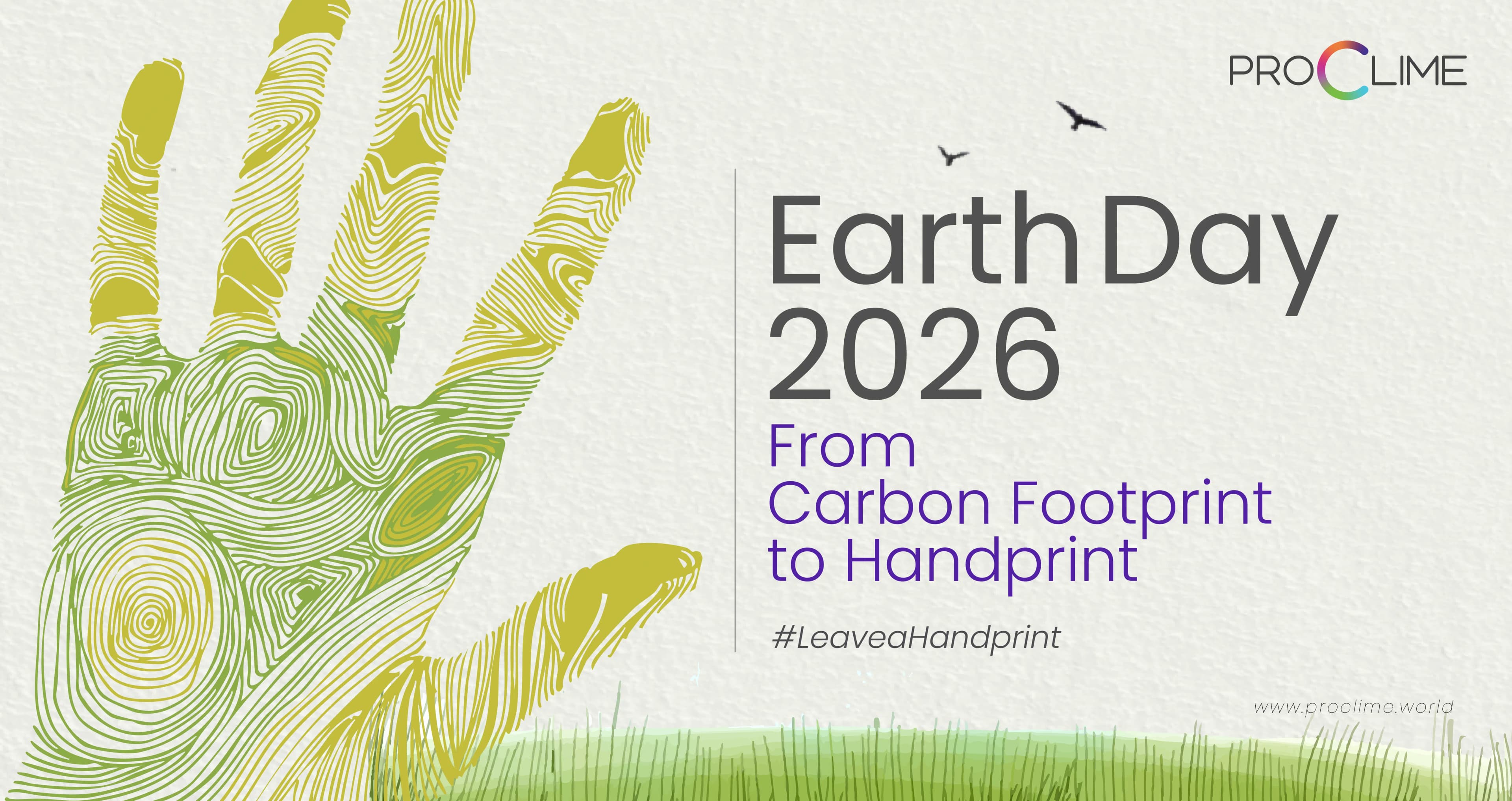
The concept of the "carbon footprint" has been with us for nearly two decades. It has shaped how businesses report, how investors assess risk, and how consumers think about the impact of their choices. While the idea has its merits, it is becoming a limited one.
A footprint measures what you take from the world: the mark you leave by existing, consuming, operating. It frames the climate question as a problem of subtraction: "How do we do less harm?"
That framing has done useful work but there is another question it does not ask, "What are you building?"
A carbon handprint is the positive mark you leave through deliberate action. Not the emissions you avoided, but the impact you created. A project funded. A system restored. A community whose livelihood is now tied to a functioning ecosystem rather than one being stripped of it.
The shift from footprint to handprint is not about letting businesses off the hook for their emissions. Measurement matters. Accountability matters. But the most credible form of climate leadership is not a company that has offset its harm. It is a company that has contributed something that would not exist without it.
That is the question we are asking this Earth Day.
In Himachal Pradesh, ProClime recently broke ground on a biochar project that illustrates what this means in practice.
The raw material is pine needles, which accumulate across their forests every season and is one of the primary causes of the forest fires that have become a predictable annual problem in the region. The conventional response is controlled burning. This project converts that same biomass into biochar instead, permanently locking in carbon that would otherwise return to the atmosphere, while returning value to the land and the communities that manage it.
The facility processes approximately 1.5 tonnes of biomass per day. It is being developed alongside Dr. Y.S. Parmar University of Horticulture and Forestry and the Himachal Pradesh Forest Department, with a dedicated research programme focused on validating carbon permanence and optimising biochar application across local cropping systems.
The result is a measurable, verifiable contribution to soil health, rural livelihoods, reduced fire risk, and long-term carbon removal. A handprint.
Earth Day has accumulated a credibility problem over the years. Brands show up in green, make pledges, and move on. The messaging has become predictable enough that the most engaged audiences now tune it out.
The question worth asking on 22 April is not “how committed does your company sound?” It is “what did your company build?”
As a climate company, this idea is baked into ProClime's ethos. Our mission is to create a pro-climate world not by treating the climate crisis as a liability to be managed, but as a genuine opportunity to build lasting impact at scale. Every project we take on is evaluated against eight core pillars: Additionality, Transparency, Longevity, Permanence, High Integrity, Strong Governance, Compelling Narrative, and Sound Financials. Together, they are the difference between a project that looks good on paper and one that holds up under scrutiny; from registries, from buyers, and from the communities the project is designed to serve. That is what our handprint looks like.
If you want to talk about what building a handprint could look like for your organisation, get in touch with us today.