30 March 2026
 Shimla, Himachal Pradesh
Published on: 3/30/2026
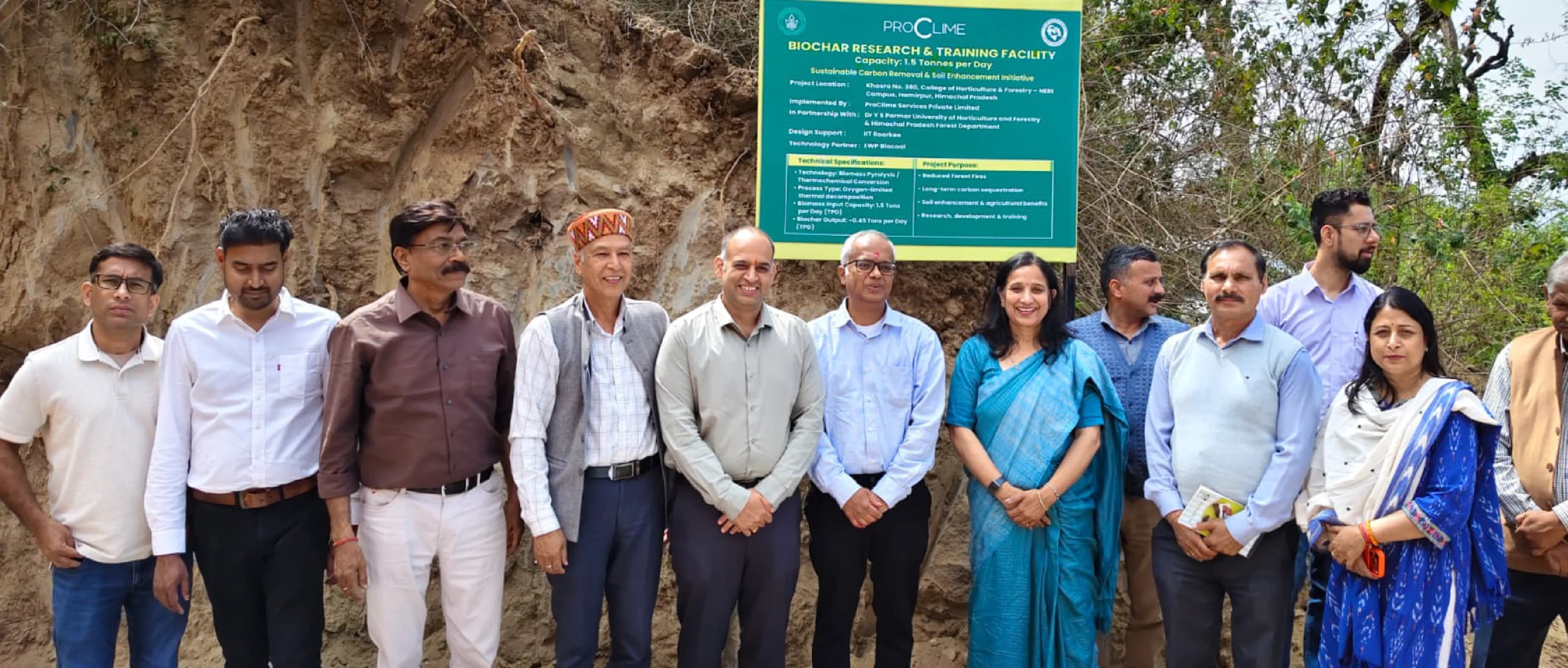
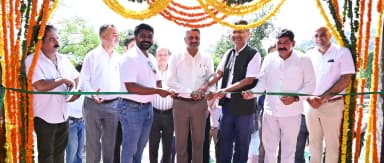
ProClime today marked the groundbreaking of its biochar project in Himachal Pradesh with a Bhoomi Puja ceremony held on 27th March 2026, alongside the launch of a dedicated Biochar Research & Development (R&D) Program in collaboration with Dr. Y.S. Parmar University of Horticulture & Forestry.
The Bhoomi Puja, a customary ceremony symbolising respect for land and the beginning of construction, reflects the project’s integration with local traditions and community context, while advancing a scientifically grounded carbon removal initiative.
This integrated initiative represents a significant step in advancing implementation-led carbon removal infrastructure in India, combining on-ground deployment with scientific validation to support scalable, high-integrity biochar systems.
The facility is designed to process approximately 1.5 tonnes of biomass per day, converting agricultural and forest residues into biochar. This will enable long-term carbon storage while enhancing soil health and agricultural productivity. The project is expected to become operational within 45 days, with full-scale implementation targeted within 120 days.
The newly launched R&D program will focus on strengthening the scientific and application framework of biochar systems. Key areas of research include:
• Biochar characterization across diverse biomass feedstocks
• Soil health and agricultural productivity impacts
• Carbon stability and permanence assessment
• Application-specific optimization across cropping systems
In addition, the R&D centre will serve as a training and capacity-building hub for ProClime’s biochar facility personnel. Operational teams will be trained on feedstock handling, process optimisation, and quality control protocols, ensuring that learnings from research are directly translated into consistent, on-ground performance.
This initiative builds on ProClime’s previously announced Memorandum of Association (MoA) with the Government of Himachal Pradesh, establishing a tri-party collaboration between ProClime, Dr. Y.S. Parmar University, and the Himachal Pradesh Forest Department.
The program leverages locally available biomass resources, including pine needles and other forest residues, creating a circular model that contributes to:
• Reduction of forest fire risks
• Generation of rural livelihoods
• Development of high-integrity carbon credits
Himachal Pradesh, with a forest cover of approximately 27.73%, presents significant potential for biochar-based carbon removal systems integrated with ecosystem management.
Leadership Commentary
Vijayakumar Rangaraju, Chief Mission Officer, ProClime, said:
“For carbon removal to be meaningful, it has to work for both the climate and the communities closest to the land. This project is designed to do exactly that by transforming locally available biomass into a solution that supports soil health, creates rural income, and delivers long-term carbon storage.”
Samrat Sengupta, Technical Director, ProClime, added:
“A robust biochar system needs both production capacity and consistency in feedstock, process control, and measurable outcomes. This initiative is designed to build that reliability into the system, so that what we produce is scientifically validated and market-ready.”
Dr. Devina Vaidya, Scientist, Dr. Y.S. Parmar University of Horticulture & Forestry, said:
“Biochar has significant potential to improve soil systems while contributing to long-term carbon storage and its effectiveness depends on how it is produced and applied in local conditions. Through this collaboration, we aim to generate rigorous, field-based evidence that supports both agricultural outcomes and carbon permanence over time.”
Mr. Nishant Mandotra, Conservator of Forests, Hamirpur Circle, said:
“Forest biomass such as pine needles has long been a management challenge, particularly in fire-prone regions. Initiatives like this create a structured pathway to utilise this material productively, reducing fire risk while contributing to climate mitigation and supporting local livelihoods.”
Proclime : [email protected]