Meaningful climate impact across five districts
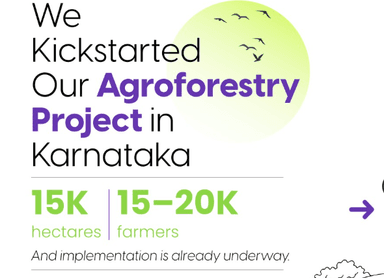
Spanning a planned 15,000 hectares across the Raichur, Chikkamagaluru, Hassan, Kodagu, and Uttara Kannada districts of Karnataka, the ProClimate Agriculture and Agroforestry Project (KASALM) is a Sustainable Agricultural Land Management (SALM) initiative. At full implementation, it is projected to deliver approximately 72,715 tCO₂e in emission reductions and removals annually, and an estimated 2,908,609 tCO₂e cumulatively over its 40-year crediting period.
Long-term commitment to farmers and carbon outcomes
With a 40-year crediting period running from 1 October 2026 to 30 September 2066, the project is designed to deliver lasting improvements in soil health, farmer incomes, and climate resilience — not short-term gains.
Standardised and credible implementation framework
The project applies Verra’s VM0042 v2.2 “Improved Agricultural Land Management” methodology under VCS Standard v5.0 — a globally recognised framework for quantifying, monitoring, and verifying emission reductions from improved farming practices.
Phased rollout with a clear regional focus
The project start date is 2 July 2026, with an initial phase covering 7,500 hectares scaling to the full 15,000-hectare target across three agro-climatic zones of Karnataka. The project is currently at the pipeline listing stage with Verra, ahead of independent validation.
The ProClimate Agriculture and Agroforestry Project – Karnataka (Project ID 6146) is a large-scale Sustainable Agricultural Land Management (SALM) and agroforestry initiative developed by ProClime Services Private Limited, in partnership with implementing partner Vedic Green Solutions (VGS). The project supports smallholder rice and mixed-crop farmers in shifting from conventional cultivation to improved, climate-friendly farming practices reducing greenhouse gas emissions while improving soil health, water use, and farm incomes.
Latest Updates on the Project
Karnataka SALM Project Advances with Technical and Field Implementation Planning
20 August 2026
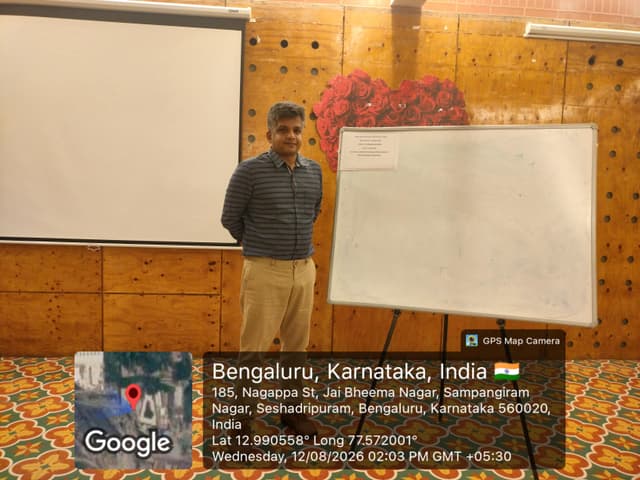
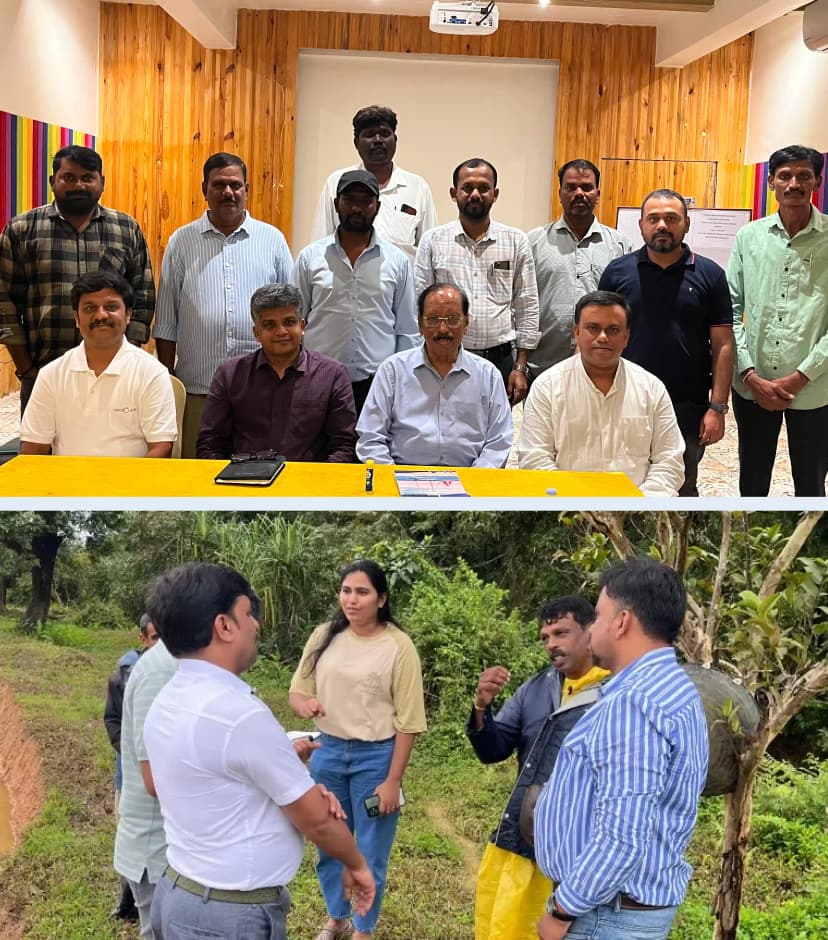
ProClime, together with its implementation partner Vedic Green Solutions (VGS), conducted a two-day technical and implementation planning workshop on 12 and 13 August 2026 for the ProClimate Agriculture and Agroforestry Project – Karnataka. The workshop focused on strengthening the project's readiness for field implementation, validation, verification and future carbon-credit issuance. Key areas discussed included baseline assessment, project boundary delineation, AWD and SALM implementation, agroforestry, fertilizer management, farmer engagement, FPIC, evidence management and quality control.
Key areas of focus
Baseline & eligibility: Establishing historical agricultural practices and assessing eligibility under VM0042 v2.2.
Geospatial mapping: Developing accurate plot boundaries, GPS/georeferencing and intervention-specific GIS polygons.
Climate-smart farming: Implementing AWD, SALM and improved fertilizer and water management.
Agroforestry: Integrating suitable tree species into agricultural landscapes, with monitoring of planting, survival and growth.
Farmer livelihoods: Promoting sustainable/organic practices, market linkages, value addition and potential premium markets.
Digital evidence: Strengthening the Activity-Based Monitoring System (ABMS) to provide traceable evidence linking farmers, plots, activities and dates.
The project is currently proposed to cover areas including Raichur, Kodagu, Hassan, Uttara Kannada and Chikkamagaluru, with the final district-wise and intervention-wise area to be confirmed following baseline assessment and eligibility verification.
The project team is also working to establish appropriate systems for FPIC, farmer capacity building, technical training, livelihood enhancement and carbon-related benefit-sharing opportunities.
The workshop concluded with a clear action plan covering baseline assessment, double-counting assessment, GIS methodology, agroforestry monitoring, fertilizer data collection, farmer livelihood planning and comprehensive evidence management. The Project aims to bring together climate-smart agriculture, agroforestry, improved soil and water management, digital monitoring and farmer livelihood enhancement to support more resilient and sustainable agricultural landscapes.
Project Overview
Location: Karnataka, India across the Raichur, Kodagu (Coorg), and Uttara Kannada districts, covering the North Dry Zone, the Southern Dry Zone, and a higher-rainfall zone spanning Kodagu and Uttara Kannada.
Project area: A planned 15,000 hectares, phased in from an initial 7,500 hectares.
Methodology: Verra VM0042 v2.2 (Improved Agricultural Land Management), applied under VCS Standard v5.0.
Project activities: Alternate Wetting and Drying (AWD) and Direct Seeded Rice (DSR) in paddy fields, optimised fertiliser use guided by Soil Health Cards, , agroforestry through native tree planting on field boundaries, cover cropping and reduced tillage, addressing crop residue burning, and more efficient farm operations.
Project status: Currently at the pipeline listing stage with Verra (pre-validation). Project start date: 2 July 2026; proposed initial crediting period start date: 1 October 2026.
Crediting information: A single 40-year crediting period, from 1 October 2026 to 30 September 2066, consistent with VM0042 v2.2 and VCS Program requirements.
The science behind the Sustainable Agriculture and Land Management (SALM) project is based on established principles used in AFOLU methodologies under standards such as Verra and Gold Standard. These frameworks rely on scientifically validated approaches to quantify how improved land-use practices lead to measurable emission reductions and carbon removals.
At its core, SALM focuses on enhancing soil organic carbon (SOC). Practices such as reduced tillage, crop residue management, cover cropping, and improved nutrient management increase the amount of carbon stored in soils. This is supported by agronomic and soil science research showing that better land management can convert agricultural soils into long-term carbon sinks.
The project applies a structured methodology (such as VM0042) to estimate emission reduction and removals using baseline vs project scenarios. The baseline represents conventional farming practices, while the project scenario reflects improved practices. The difference between the two determines net emission reductions.
To ensure credibility, these standards require monitoring, reporting, and verification (MRV) systems. This includes field data collection, remote sensing where applicable, and periodic third-party audits. Additional safeguards such as permanence assessments and leakage controls are also built in to ensure that the climate benefits are real, measurable, and sustained over time.