Projects/Nature Based Solutions/AFOLU/SALM/HIM Evergreen Integrated Climate Smart Agriculture, and Agroforestry Program [Project ID: 5973]
Advancing sustainable improved agriculture land management, and strengthening climate resilience and Agroforestry.
Scale with meaningful climate impact
Covering 50,000 hectares, the ProClime HIM Evergreen Sustainable Agriculture & Land Management and Agroforestry (SALM+AF) project represents a landscape-level intervention with the potential to manage approximately 13.5 million tonnes of emissions, making it a high-impact initiative within the AFOLU sector.
Long-term commitment to land and carbon outcomes
The project lifecycle 40-year, this initiative delivers enduring benefits that extend far beyond its operational lifecycle. Through sustained improvements in agricultural soil health, agroforestry systems, and carbon sequestration, the project creates a foundation for:
• Community livelihoods: long-term economic resilience and sustainable income opportunities for local populations
• Biodiversity conservation: thriving ecosystems that protect and enhance native species and habitats
• Climate action: measurable, permanent carbon reduction and removal that contributes meaningfully to global climate mitigation goals
These benefits are structured to endure throughout the project period and beyond, ensuring that environmental gains and community prosperity continue for generations to come.
Standardised and credible implementation framework
This project aligned with VM0042 v2.2, a globally recognized methodology that establishes a structured framework for monitoring, reporting, and verification. By adhering to this rigorous standard, the project strengthens the credibility of its land-use outcomes and ensures consistent, reliable carbon accounting that meets international benchmarks.
Strategic regional focus with scalable potential
The project start date is on October 1, 2026, in the sub-tropical region of Himachal Pradesh, which lies below 1500 meters above sea level. It encompasses eight districts: Hamirpur, Bilaspur, Una, Chamba, Sirmaur, Kangra, Solan, and parts of Shimla. This initiative focuses on integrating sustainable agriculture, land management practices, and agroforestry efforts specifically designed for the region. The aim is to create a replicable model for climate-resilient rural landscapes.
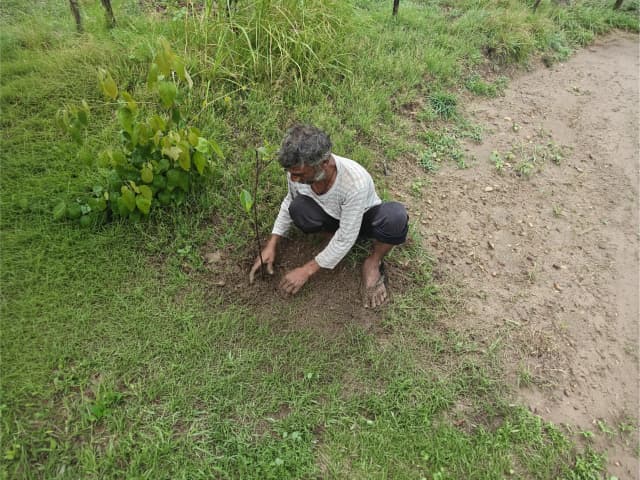
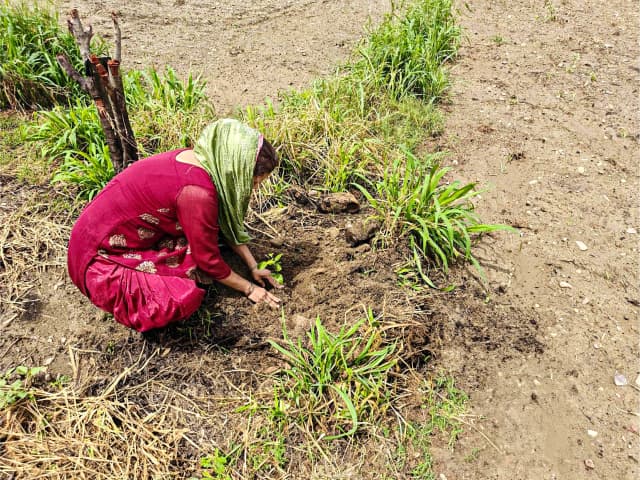
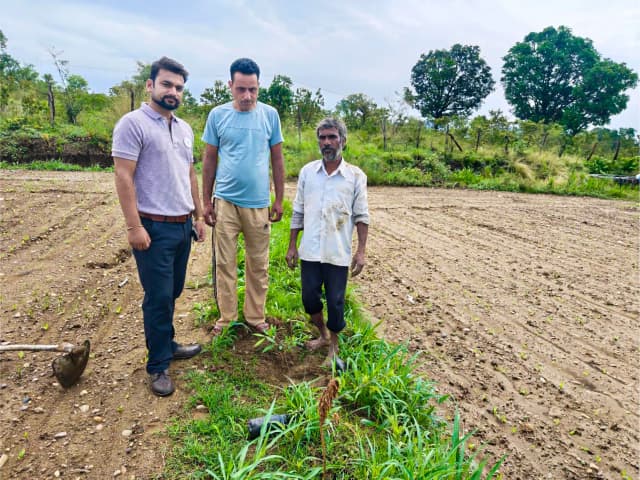
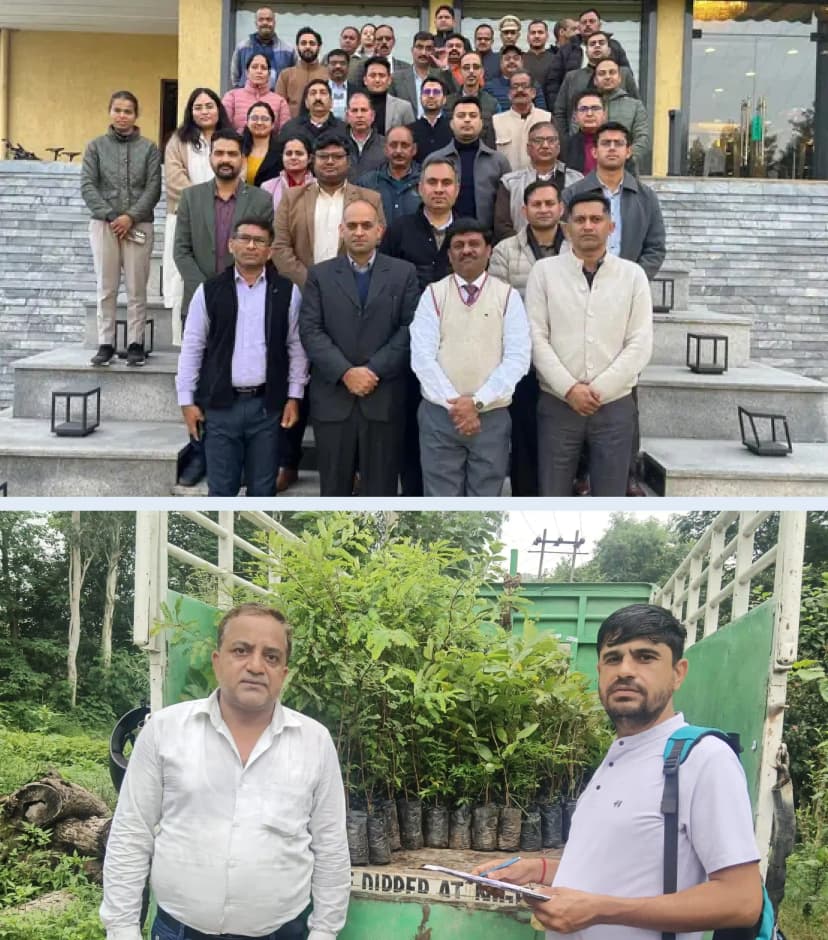
As part of Phase I of the 15,000-hectare HIM Evergreen Sustainable Agriculture and Land Management (SALM) and Agroforestry Project, the second round of the agroforestry plantation drive was completed from 10–14 August 2026 across Amb Tehsil in Una District, Himachal Pradesh.
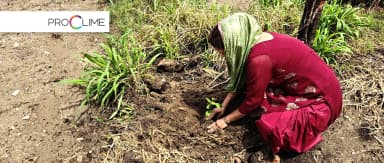
The five-day plantation drive was supported by favourable rainfall during the period, which provided suitable soil-moisture conditions for planting and early establishment of seedlings. Participating farmers planted multipurpose tree species along the agricultural bunds of their fields, enabling tree integration while retaining the land for continued crop cultivation.
The drive covered more than 25 villages, with beneficiary farmers receiving 50 tree seedlings per hectare. Species selection was guided by farmer preferences, local agroecological suitability and potential livelihood value. The plantation included Jackfruit, Amla, Jamun, Bael, Baheda, Harad, Monkey Jack and Neem.
The agroforestry intervention is designed to provide multiple environmental and livelihood benefits alongside carbon sequestration. Fruit-bearing species can provide potential future sources of farm income, while medicinal and non-timber forest product (NTFP)-producing species can contribute to livelihood diversification and household needs. Integrating trees within agricultural fields can also support soil protection, on-farm biodiversity, microclimate regulation, ecosystem resilience and long-term carbon storage.
The completion of this plantation round contributes to the ongoing implementation of the HIM Evergreen project’s agroforestry component, which focuses on integrating multipurpose trees into existing agricultural systems while maintaining agricultural productivity. Through continued engagement with farming communities, the project is working towards more diversified, productive and climate-resilient agricultural landscapes across the project area.
The ProClime HIM Evergreen Sustainable Agriculture & Land Management and Agroforestry (SALM+AF) Project in Himachal Pradesh is a large-scale AFOLU initiative designed to integrate sustainable farming, integrating agroforestry and long-term climate impact. Spanning 50,000 hectares, the project focuses on improving soil health, enhancing vegetation cover, and building climate-resilient agricultural systems while generating measurable carbon benefits. Key highlights include:
Scale with meaningful climate impact: With an estimated emission management potential of 13.5 million tonnes, the project delivers significant carbon sequestration alongside biodiversity and land restoration benefits.
Long-term sustainability commitment: A 100-year permanence period ensures that both ecological improvements and carbon outcomes are sustained over decades, avoiding short-term gains.
Credible and standardised framework: Implementation under the VM0042 v2.2 methodology provides a structured, globally recognised system for monitoring, reporting, and verification.
Strategic regional implementation: Located in Himachal Pradesh and starting from 1 June 2026, the project is tailored to regional conditions, creating a scalable model for sustainable land use and afforestation.
The ProClime HIM Evergreen Sustainable Agriculture, Land Management, and Agroforestry Project promote sustainable agricultural practices to improve soil health, boost farm productivity, and enhance carbon sequestration. The Improved Crop Management (ICM) component focuses on practices such as reduced tillage, optimized nutrient management, crop residue retention, and crop diversification. These methods lower nitrogen fertilizer use, minimize fossil fuel reliance, and improve crop rotations, leading to reduced greenhouse gas emissions and increased carbon sequestration in soils.
Additionally, the project establishes agroforestry systems by planting multipurpose trees on farm boundaries and within fields. These trees enhance carbon sequestration, improve microclimates, promote soil fertility, control erosion, and diversify farmer income through timber and non-timber products. Increasing soil organic carbon enhances soil structure, water retention, and nutrient cycling, acting as a long-term carbon sink.
Methodology:
Under Verra’s VM0042 v2.2 methodology, emission reductions are achieved through improved agricultural land management (ALM) practices such as reduced tillage, optimized fertilizer use, sustainable agricultural practices, and agroforestry. These interventions enhance carbon inputs to soil and reduce greenhouse gas emissions like nitrous oxide and methane. Following are science-based approaches
•
• Periodic soil sampling to track changes in carbon stocks over time.
• Baseline comparison against historical land-use practices to ensure additionality.
• This combination of field measurement and modelling ensures that carbon sequestration is quantifiable, conservative, and verifiable.
• Emission reduction: By lowering synthetic agriculture input and improving nutrient efficiency
• Above-ground biomass growth, via agroforestry systems
How It Works?
1. Project Concept & Feasibility: Define project area, boundaries, and farming systems. Assess baseline and identify improved practices. Conduct additionality assessment. Outcome is feasibility clarity, defined scope, and a structured implementation pathway.
2. Methodology & Baseline Establishment: Confirm appropriate internationally recognised methodology applicability for cropland and emission reduction potential. Establish baseline using historical data and surveys. Outcome is validated methodology fit and quantified baseline emissions/removals in tCO₂e.
3. Project Design & Validation: Prepare PDD including baseline, monitoring, safeguards, and quantification. Third-party validation reviews compliance, addressing CARs and CLs. Outcome is an approved validation report enabling project registration readiness.
4. Registration & Implementation: Register project with Verra under VCS program. Implement activities through farmer onboarding, training, and climate-smart practices adoption. Outcome is an officially registered project with operational field-level execution.
5. Monitoring & Quantification: Continuously monitor inputs, practices, and soil carbon using surveys, remote sensing, and models. Apply landscape suitable allometric equations. Outcome is robust datasets and quantified net emission reductions in tCO₂e.
6. Verification & Credit Issuance: Third-party verification confirms emission reductions. Verra issues VCUs, enabling market transactions. Revenue is distributed among stakeholders. Outcome is certified carbon credits and financial returns to project stakeholders.
Biomass Allocation and Carbon Stock of Existing Agroforestry System In Mid-Hills of Himachal Pradesh, India.

Author : Kaur, & Kakkar, Preeti & Chauhan, Manish & Sharma, Komal & Bhagta, Shikha & Puri, Sunil.
Publication : Plant Archives. 25. 599-604. 10.51470/Plantarchives.2025.v25.no.1.090.
https://www.researchgate.net/publication/391249250_BIOMASS_ALLOCATION_AND_CARBON_STOCK_OF_EXISTING_AGROFORESTRY_SYSTEM_IN_MID-HILLS_OF_HIMACHAL_PRADESH_INDIA
Agroforestry systems vis-a-vis socio-economic dynamics of the farmers: A case study of Baijnath tehsil, Himachal Pradesh. Indian Journal of Soil Conservation.
Author : Kumari, Parveen & Kaler, Navjot & Sharma, Praval & Sharma, Som & Sharma, Ajit & Negi, Chaman & Dhaka, Ravindra.
Publication : Indian Journal of Soil Conservation. 52. 249-260. 10.59797/ijsc.v52.i3.179.
https://ijsc.iaswc.com/index.php/ijsc/article/view/164
Climatic variability and its impact on maize and wheat yield in Himachal Pradesh.
Author : SINGH P, GULERIA A, GULERIA A and VAIDYA MK. 2024.
Publication : MAUSAM, 75, 3 (July 2024), 669-678.
https://doi.org/10.54302/mausam.v75i3.5882
Himachal Pradesh Human Development Report 2025: Building the Future in a Climate-Impacted
Author : Government of Himachal Pradesh, 2025.
https://www.undp.org/sites/g/files/zskgke326/files/2025-10/hp_hdr_summary_1.pdf
Recent advances in organic agriculture: innovations, challenges, and opportunities.
Author : Meshram S, Mansor HB, Adhikari TB.
Publication : Front Plant Sci. 2026 Jan 9;16:1681928. doi: 10.3389/fpls.2025.1681928. PMID: 41584672; PMCID: PMC12827596.
https://pubmed.ncbi.nlm.nih.gov/41584672/
Economic viability of organic farming in Himachal Pradesh: an empirical verification.
Author : Tilak Raj. 2019.
Publication : Indian Journal of Hill Farming. Volume 32, Issue 1, Page 122-130
https://epubs.icar.org.in/index.php/IJHF/article/view/94796



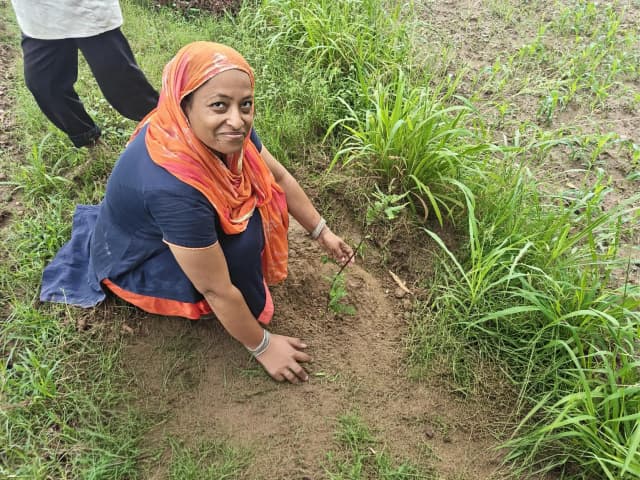


ProClimate Agriculture and Agroforestry project - Karnataka [Project ID: 6146]
Location: Karnataka, India
View Details