Projects/Nature Based Solutions/AFOLU/SALM/ProClime Karnataka Hasiru Bhoomi Climate Smart Agriculture and Agroforestry Project
A sustainable land-use project supporting better farming practices, improved soil health, and long-term climate benefits.
Scale with meaningful climate impact
The project combines a large land area with significant emission management potential, indicating the ability to generate substantial and measurable climate outcomes over time.
Long-term commitment to land and carbon outcomes
A multi-decade permanence period reflects a structured approach to ensuring that both land improvements and emission reductions are maintained consistently, rather than short-term gains.
Standardised and credible implementation framework
Using an established AFOLU methodology ensures the project follows a defined system for monitoring and verification, which supports reliability in both environmental outcomes and carbon accounting.
The ProClime Karnataka Hasiru Bhoomi Climate Smart Agriculture and Agroforestry Project is an AFOLU initiative focused on improving land use practices and agricultural systems across Karnataka. Spanning a total area of 15,000 hectares, the project is designed to support the adoption of sustainable farming methods that enhance soil health, increase land productivity, and contribute to measurable climate benefits.
With a project start date of 1 June 2026, the initiative is structured for long-term impact, with a permanence period of 40 years. This extended timeframe reflects a commitment to maintaining consistent land management practices and ensuring that environmental outcomes are sustained over decades. The project applies the VM0042 methodology, providing a defined framework for monitoring, reporting, and verification of outcomes related to land use and emissions.
The project is expected to manage approximately 2 million tonnes of emissions over its lifetime, demonstrating its potential to contribute meaningfully to climate mitigation efforts. By working within the AFOLU sector, the initiative also supports improvements in local ecosystems while enabling farmers to transition towards more sustainable and resilient agricultural practices.
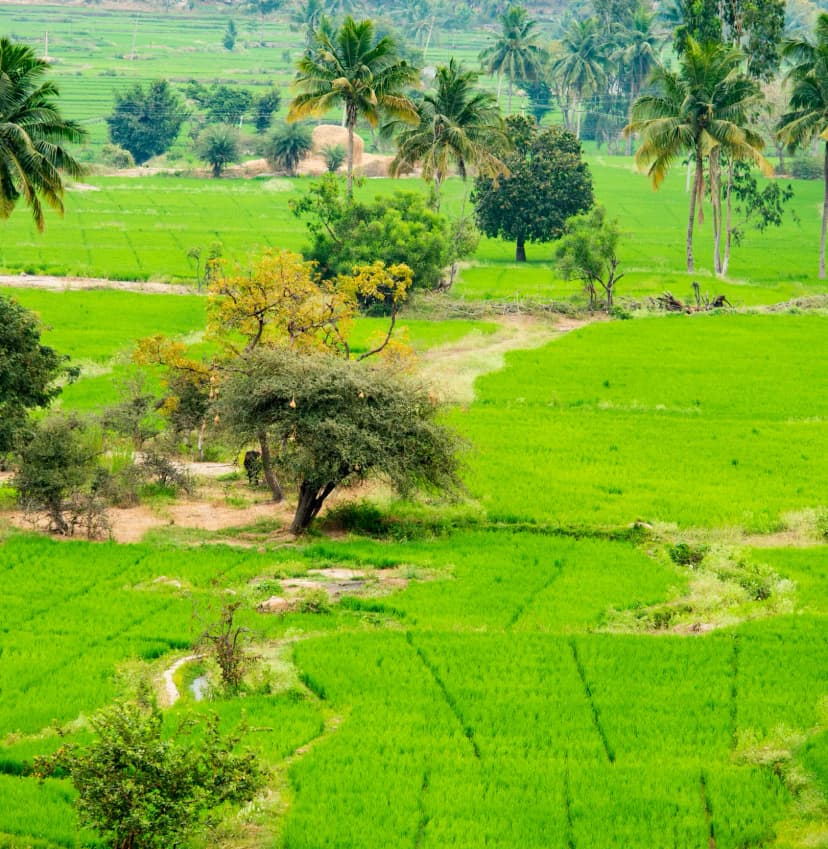
The science behind the Sustainable Agriculture and Land Management (SALM) project is based on established principles used in AFOLU methodologies under standards such as Verra and Gold Standard. These frameworks rely on scientifically validated approaches to quantify how improved land-use practices lead to measurable emission reductions and carbon removals.
At its core, SALM focuses on enhancing soil organic carbon (SOC). Practices such as reduced tillage, crop residue management, cover cropping, and improved nutrient management increase the amount of carbon stored in soils. This is supported by agronomic and soil science research showing that better land management can convert agricultural soils into long-term carbon sinks.
The project applies a structured methodology (such as VM0042) to estimate emission reduction and removals using baseline vs project scenarios. The baseline represents conventional farming practices, while the project scenario reflects improved practices. The difference between the two determines net emission reductions.
To ensure credibility, these standards require monitoring, reporting, and verification (MRV) systems. This includes field data collection, remote sensing where applicable, and periodic third-party audits. Additional safeguards such as permanence assessments and leakage controls are also built in to ensure that the climate benefits are real, measurable, and sustained over time.





ProClime HIM Evergreen Integrated Climate Smart Agriculture, and Agroforestry Program
Location: Himachal Pradesh, India
View Details
ProClime Kisan Bhoomi Samvardhan Sustainable Agriculture & Land Management (SALM) and Alternate Wetting and Drying (AWD) Project in Uttar Pradesh
Location: Uttar Pradesh, India
View Details